
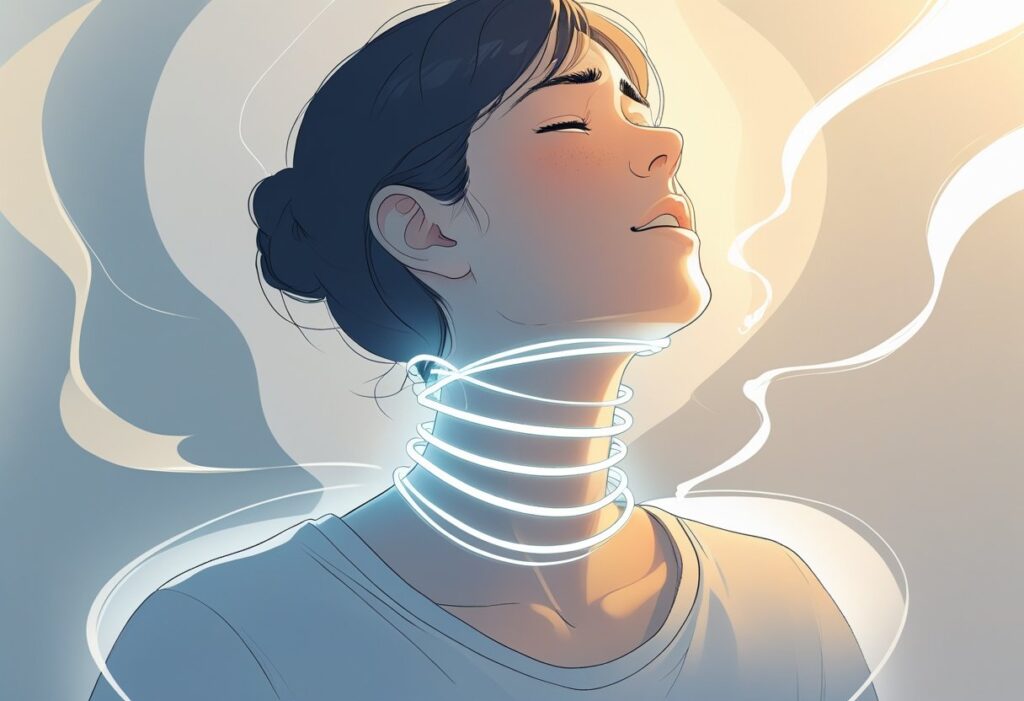
If you have ever felt like there is a lump in your throat that won’t go away, you are not alone. As we navigate the complexities of 2026, many individuals are reporting that their throat feels tight when anxious. This sensation, often medically referred to as globus pharyngeus, is a classic physical manifestation of the body’s “fight or flight” response.
While the feeling can be alarming—sometimes even leading to a secondary panic loop—it is rarely dangerous. Understanding why your body reacts this way is the first step toward regaining control and calming your nervous system.

The Science: Why Does Anxiety Cause Throat Tightness?
When you experience anxiety, your brain triggers a surge of hormones like adrenaline and cortisol. These chemicals prepare your body to face a perceived threat. Even if there is no physical danger, your body reacts as if there is.
One of the primary physiological changes during this state is muscle tension. Evolutionarily, your body tightens muscles to protect vulnerable areas, including the neck and throat. Because the throat contains a complex network of small muscles, it is highly susceptible to this involuntary gripping.
Furthermore, anxiety often changes your breathing patterns. You may engage in shallow, rapid chest breathing rather than deep, diaphragmatic breathing. This shift disrupts the natural rhythm of your throat muscles, contributing to that uncomfortable, restricted feeling.
Is It Just Anxiety? Recognizing the Symptoms
It is important to distinguish between anxiety-induced tightness and other medical conditions. Anxiety-related throat tightness typically presents with:
- A “lump” sensation that does not interfere with your ability to swallow food or liquid.
- Fluctuating intensity—the feeling often disappears when you are distracted or relaxed.
- Accompanying symptoms like a racing heart, sweaty palms, or racing thoughts.
If you find that you have persistent difficulty swallowing, pain, or visible swelling in the neck, it is essential to consult a healthcare professional. In 2026, telemedicine makes it easier than ever to get a quick screening to rule out underlying issues like acid reflux or thyroid problems.
5 Steps to Relax Throat Muscles During Anxiety
When that familiar constriction begins, you don’t have to suffer in silence. Use these five evidence-based techniques to help your throat muscles release their tension:
- Diaphragmatic Breathing: Place one hand on your chest and one on your stomach. Breathe in slowly through your nose, ensuring only your stomach rises. This signals your parasympathetic nervous system to “rest and digest.”
- The Cold Water Trick: Drink a glass of cold water slowly. The physical act of swallowing forces the throat muscles to reset, while the cold temperature provides a sensory distraction that can break the anxiety loop.
- Gentle Neck Stretches: Slowly tilt your head from side to side. Keep your shoulders dropped and away from your ears to reduce the “hunching” tension that often accompanies anxiety.
- Humming or Vocalizing: Humming creates a gentle vibration in the throat. This can help “unlock” the muscles that feel seized and promotes a sense of internal calm.
- Progressive Muscle Relaxation (PMR): Systematically tense and release different muscle groups, starting from your toes and working up to your neck. This teaches your body the difference between tension and relaxation.
<img alt="When your throat feels tight: possible causes and relief." src="https://www.citymd.com/sites/default/files/styles/imagecomponentstyle_large/public/2024-06/Throat-Tight.png?itok=Jeb6vB-h” style=”max-width:100%; height:auto; border-radius:8px; margin: 1rem 0;” />
Long-Term Strategies for Managing Anxiety
While quick fixes are helpful, addressing the root cause is the best way to prevent the feeling from returning. In 2026, the focus on holistic mental health has never been stronger.
Cognitive Behavioral Therapy (CBT)
CBT remains the gold standard for treating anxiety. It helps you identify the thought patterns that lead to the physical sensation of a tight throat. By reframing “I can’t breathe” into “My throat muscles are just tight because I am anxious,” you strip the symptom of its power.
Lifestyle Adjustments
- Mindfulness Meditation: Even 10 minutes a day can lower your baseline stress levels.
- Limit Stimulants: High caffeine intake can mimic or exacerbate the physical sensations of anxiety, including throat tension.
- Prioritize Sleep: Fatigue lowers your threshold for stress, making you more prone to somatic anxiety symptoms.
Conclusion: You Are in Control
It is perfectly normal to feel unnerved when your throat feels tight when anxious. However, remember that this is a temporary physical response to a psychological state. By practicing the relaxation techniques mentioned above and focusing on long-term anxiety management, you can reduce the frequency and intensity of this sensation.
If the feeling persists or significantly impacts your quality of life, reach out to a therapist or primary care physician. You have the tools to soothe your nervous system and breathe easier.