
Waking up in the middle of the night to a “dead” arm that feels like pins and needles is an experience most of us know all too well. While it can be alarming, that tingling sensation—medically known as paresthesia—is usually a signal from your body that your nerves or blood vessels are under temporary pressure. As we head into 2026, understanding the mechanics of your sleep posture is more important than ever for maintaining long-term nerve health.
Whether you are a lifelong side sleeper or someone who shifts throughout the night, arm numbness is rarely a mystery. It is almost always a consequence of how your anatomy interacts with your mattress and pillow.

What Exactly Is Paresthesia?
When you feel that “asleep” sensation in your arm, you are experiencing paresthesia. In simple terms, this occurs when a nerve is compressed, temporarily disrupting the electrical signals sent between your limb and your brain.
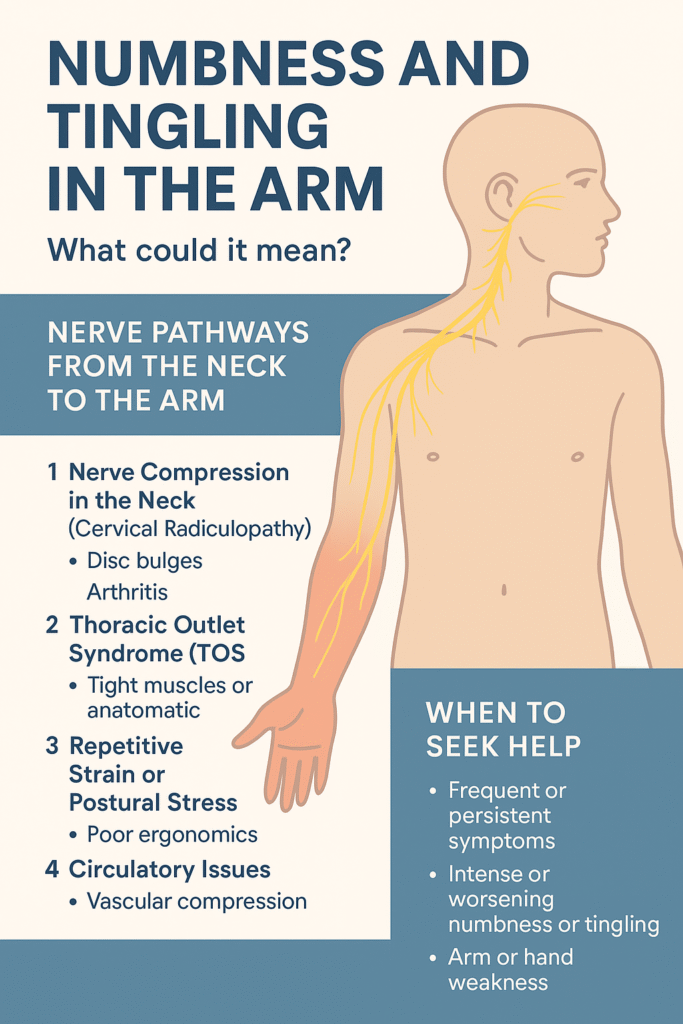
While many people assume the numbness is caused by a lack of blood flow, it is more commonly the result of nerve compression. When you tuck your arm under your pillow or let your shoulder collapse inward, you may be pinching the brachial plexus—a bundle of nerves that runs from your neck down into your arm.
Why Side Sleeping Triggers Arm Numbness
Side sleeping is often recommended by sleep experts for better breathing, yet it creates specific postural challenges. When you lie on your side, your shoulder bears the brunt of your body weight. If your mattress is too firm or your pillow lacks proper loft, your shoulder may be pushed toward your neck, creating a “crush” effect on the nerves in your shoulder girdle.
The “Opposite Arm” Paradox
Interestingly, you might find your top arm going numb even when you aren’t lying directly on it. This happens because the top arm often hangs forward or across the chest, pulling on the shoulder joint and straining the muscles in the chest and neck. This constant tension can lead to nerve impingement that manifests as tingling in the fingers or forearm.
The Role of Your Neck and Spine
It is a common misconception that the problem is always in the arm itself. In reality, hand numbness while sleeping is frequently a “referred” sensation originating from the cervical spine (the neck). If your head is not properly aligned with your spine, the nerves exiting your neck can become irritated, sending shockwaves of numbness down the entire arm.

Practical Solutions for 2026 Sleepers
If you are tired of waking up with a heavy, tingly arm, follow these evidence-based adjustments to improve your sleep quality:
- Optimize Your Pillow Loft: Ensure your pillow fills the gap between your ear and your shoulder. If the pillow is too thin, your neck will tilt downward; if it’s too thick, it will tilt upward. Both scenarios stress the nerves.
- Hug a Body Pillow: Placing a body pillow between your arms and chest prevents your top shoulder from rolling forward. This keeps your chest open and reduces tension on the brachial plexus.
- Check Your Mattress Firmness: If your mattress is too firm, it won’t allow your shoulder to sink in slightly, creating a pressure point. A medium-firm mattress with a memory foam topper often provides the best balance for side sleepers.
- Adopt the “Neutral” Arm Position: Instead of tucking your arm under your pillow, try keeping your arms at your sides or resting them on a pillow in front of your chest.
- Strengthen Your Posture: Incorporating light neck and shoulder stretches before bed can help release the daily tension that makes your nerves more sensitive to compression at night.
When Should You See a Doctor?
While occasional arm numbness is usually benign and related to sleep position, chronic numbness should not be ignored. You should consult a healthcare professional in 2026 if you notice:
- Persistent weakness or loss of grip strength in the hand.
- Numbness that lasts for more than an hour after waking up.
- Radiating pain that travels from the neck down the arm during the day.
- Symptoms that are accompanied by dizziness, chest pain, or shortness of breath.
These could be signs of underlying conditions like Carpal Tunnel Syndrome, Cubital Tunnel Syndrome, or cervical radiculopathy, which require professional diagnosis and targeted treatment.
Final Thoughts
Arm numbness after sleeping on your side is a common, often preventable issue. By focusing on your spinal alignment, using the right support pillows, and being mindful of your shoulder position, you can eliminate that frustrating “pins and needles” sensation. Prioritize your sleep ergonomics today to ensure you wake up refreshed and pain-free every morning.